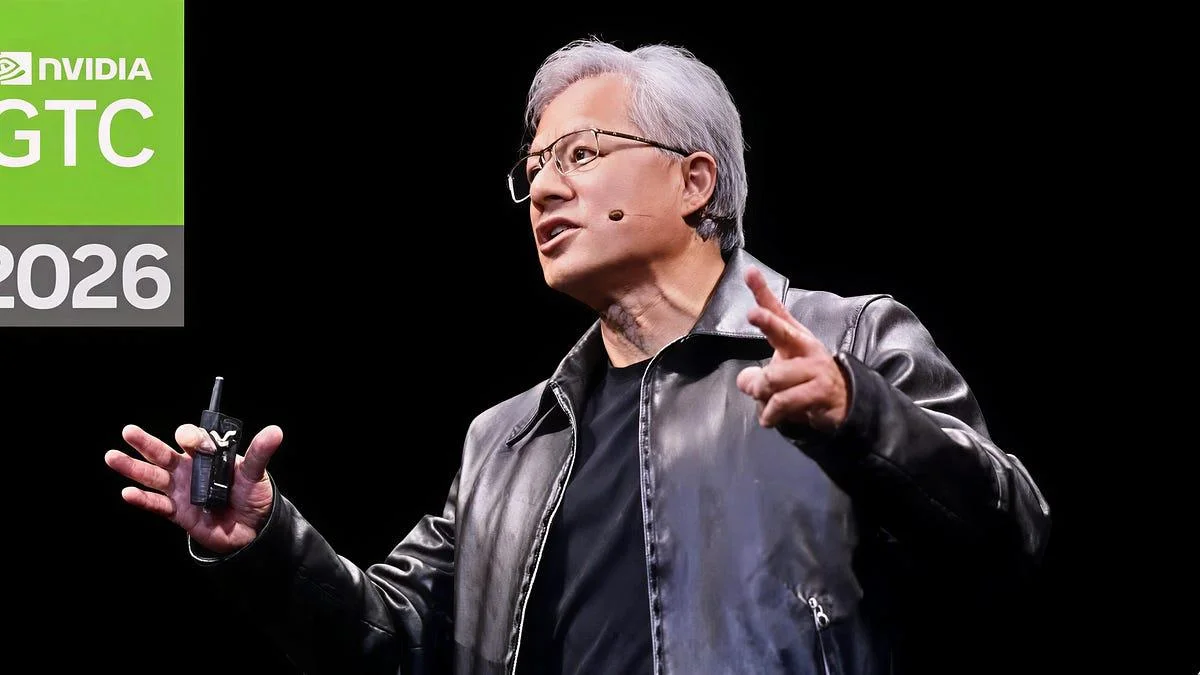
NVIDIA has announced the reinstatement of its co-founder, Jensen Huang, as President and Chief Executive Officer, marking a dramatic leadership reversal less than two weeks after his unexpected resignation.
The decision, announced on Monday, November 23, 2026, also restores Huang to NVIDIA's Board of Directors, putting him back in charge of one of the world's most influential artificial intelligence companies.
The reinstatement follows a period of uncertainty surrounding NVIDIA's leadership, corporate governance, and national security concerns.
Investors welcomed the announcement, with NVIDIA shares surging nearly 30% in early trading and the broader technology market recording substantial gains.
But beyond the market reaction, Huang's return raises important questions about leadership, accountability, and the future of the artificial intelligence industry.
What Happened to Jensen Huang?
On November 12, 2026, NVIDIA announced that Jensen Huang had resigned as CEO, president, and board director.
His departure followed reports concerning extramarital relationships, including one involving a businesswoman whom United States authorities reportedly suspected of having links to Chinese intelligence.
The allegations raised concerns about potential national security risks and the handling of sensitive information.
However, suspicion of intelligence connections is not proof of espionage, and the United States Department of Justice had not publicly established that the woman was a Chinese intelligence operative.
Following Huang's departure, NVIDIA appointed its longtime Chief Financial Officer, Colette Kress, as interim CEO.
Harvey C. Jones was also appointed Chair of the Board of Directors.
The company initially indicated that it would search for a permanent replacement, with its leadership emphasizing business continuity.
However, the situation changed dramatically within days.
Why Did NVIDIA Reinstate Jensen Huang?
According to NVIDIA's official announcement, the Board of Directors unanimously voted to reinstate Huang following discussions and meetings with him.
The board said it had become satisfied with Huang's candor and his ability to lead the company.
Importantly, NVIDIA confirmed that it had received input from senior levels of the United States government when evaluating potential national security concerns.
Following that consultation, the board expressed confidence that Huang's return did not pose a national security risk.
Board Chair Harvey Jones said Huang remained the right person to lead NVIDIA and that his return served the interests of shareholders, employees, customers, and partners.
The decision represents a significant change from NVIDIA's position just days earlier, when the board had indicated that it did not intend to reinstate him.
Jensen Huang Responds to His Reinstatement
In his first public statement following the announcement, Huang expressed gratitude for the opportunity to return.
He described his return as an honor and emphasized his renewed commitment to leading NVIDIA at a crucial moment in technological development.
Huang also thanked NVIDIA's board, executive leadership, employees, shareholders, industry partners, and his family for their support.
His reinstatement restores the leadership of an executive who has played a central role in building NVIDIA over more than three decades.
Colette Kress, who served as interim CEO, will continue as Executive Vice President and Chief Financial Officer.
Harvey Jones will remain Chair of the Board.
NVIDIA Stock Surges Following the Announcement
Financial markets reacted strongly to Huang's return.
According to Reuters, NVIDIA shares jumped nearly 30% in early trading on November 23, while the Nasdaq Composite rose almost 6% during the same period.
The broader S&P 500 also recorded substantial gains.
The rally reflected renewed investor confidence in NVIDIA's leadership and its strategic direction.
NVIDIA occupies a central position in the global AI infrastructure market, supplying processors and computing platforms used by major cloud providers, research laboratories, and technology companies.
As a result, uncertainty surrounding NVIDIA can influence investor sentiment across the wider artificial intelligence industry.
However, a sharp stock market rally does not necessarily resolve the company's long-term governance and operational challenges.
Share prices can fluctuate as investors reassess the implications of major corporate developments.
Why Jensen Huang Matters to the AI Industry
Jensen Huang co-founded NVIDIA in 1993, initially focusing on graphics processing technology.
Under his leadership, NVIDIA evolved from a company primarily associated with gaming graphics cards into a major supplier of accelerated computing infrastructure.
Its graphics processing units, commonly known as GPUs, have become essential tools for training and operating advanced AI models.
Technology companies developing large language models, autonomous systems, scientific computing applications, and AI-powered software increasingly depend on high-performance computing hardware.
NVIDIA's CUDA software ecosystem, networking technologies, and AI platforms have also contributed to its position in the industry.
Huang has been closely associated with NVIDIA's long-term strategy, major product launches, and relationships with leading technology companies.
His return therefore has implications beyond NVIDIA's executive offices.
It may influence how investors and customers assess the company's ability to maintain its technology roadmap and business partnerships.
What Does This Mean for NVIDIA's AI Strategy?
Huang's reinstatement provides an opportunity for NVIDIA to restore continuity to its executive leadership.
Several strategic priorities remain particularly important.
1. Expanding AI Infrastructure
Demand for AI computing infrastructure continues to drive investment in GPUs, networking systems, data centers, and specialized software.
NVIDIA must maintain its ability to supply competitive products while supporting increasingly demanding AI workloads.
2. Strengthening Relationships With Technology Companies
NVIDIA works closely with cloud providers, AI developers, hardware manufacturers, and enterprise customers.
Stable leadership can help reassure partners about the continuity of existing commitments and future infrastructure investments.
3. Maintaining Competition and Innovation
Competition in AI hardware continues to intensify.
AMD, Intel, specialized AI chip developers, and major cloud companies developing their own processors are all pursuing opportunities in accelerated computing.
NVIDIA must continue innovating rather than relying entirely on its existing market position.
4. Addressing Corporate Governance Concerns
Although Huang has returned, the questions surrounding his departure have not disappeared.
NVIDIA has confirmed that an independent committee's investigation will continue.
The company has also established a National Security and Export Control Committee and announced plans to recruit a Chief Compliance Officer.
These measures suggest that corporate oversight and regulatory compliance will remain important priorities.
The Role of the United States Government
One of the most unusual aspects of Huang's reinstatement is the involvement of the United States government.
President Donald Trump publicly supported Huang's return and described the board's decision favorably.
NVIDIA's official statement acknowledged that its directors had received government input before concluding that his reinstatement did not pose a national security risk.
This reflects the strategic importance of advanced semiconductor technology.
AI computing hardware is increasingly relevant to national security, economic competitiveness, and technological leadership.
Restrictions on advanced chip exports, international competition, and concerns about sensitive technology have made semiconductor companies important participants in geopolitical discussions.
NVIDIA's leadership transition illustrates how decisions involving major technology companies can extend beyond traditional corporate governance issues.
What Does This Mean for Developers and Technology Businesses?
For software developers, AI startups, and technology companies, the significance of Huang's return goes beyond the stock market.
NVIDIA technology supports a substantial part of the AI development ecosystem.
Developers rely on NVIDIA GPUs, CUDA, inference frameworks, and AI software tools to build applications and conduct research.
Businesses also depend on the availability of AI infrastructure to deploy intelligent systems, automate processes, and develop new products.
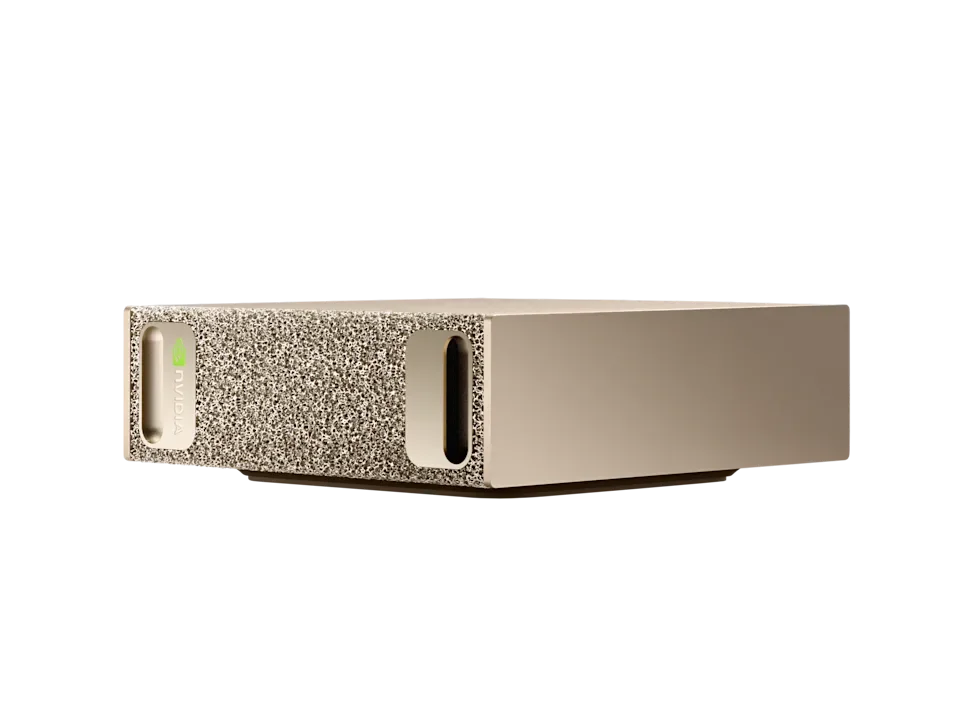
For companies investing in local AI infrastructure, including systems such as NVIDIA DGX Spark, leadership stability may provide greater confidence in the continuity of NVIDIA's hardware and software ecosystem.
However, organizations should avoid making infrastructure decisions solely on the basis of executive leadership.
Performance, cost, compatibility, support, security, and long-term scalability remain essential considerations.
The broader lesson is that a resilient technology strategy should not depend entirely on one individual or supplier.
Is NVIDIA's Leadership Crisis Over?
Huang's return resolves the immediate question of who will lead NVIDIA.
However, it does not necessarily bring every issue surrounding the company to a conclusion.
NVIDIA has confirmed that its independent investigation will continue.
Corporate governance specialists and investors may also examine how the board handled the initial resignation, its earlier position against reinstatement, and its subsequent reversal.
The company's response to these questions will be important in determining whether confidence in its leadership and governance can be sustained.
For now, Huang has returned to the position he held for more than three decades.
The challenge is to translate that return into stable leadership while addressing the concerns that emerged during his departure.
Final Thoughts
Jensen Huang's reinstatement is one of the most significant technology leadership developments of November 2026.
His return restores a familiar figure to the helm of NVIDIA at a time when artificial intelligence is transforming software development, enterprise computing, and the global technology industry.
The strong financial market reaction demonstrates the confidence many investors place in Huang's leadership.
Nevertheless, NVIDIA's long-term success will depend on more than its CEO.
Continued innovation, effective corporate governance, responsible leadership, regulatory compliance, and strong relationships with technology partners will remain essential.
NVIDIA has brought back its most recognizable leader. The bigger question now is whether the company can restore confidence in both its leadership and the governance structures surrounding it.
Written by Daniel Chacha, Software Developer and Founder of Chacha Technologies.
Chacha Technologies covers artificial intelligence, software engineering, digital infrastructure, cybersecurity, and emerging technology developments.
Sources
NVIDIA Newsroom — NVIDIA Board Reinstates Jensen Huang as President, CEO and Board Director, November 23, 2026.
NVIDIA Newsroom — NVIDIA Announces CEO Transition, November 12, 2026.
U.S. Securities and Exchange Commission — NVIDIA Form 8-K, November 23, 2026.
Reuters — NVIDIA Reinstates Jensen Huang as CEO, Igniting Tech Surge, November 23, 2026.
Associated Press — NVIDIA Board Reinstates Jensen Huang as CEO, November 23, 2026.